Async Coaching
Voice Note Coaching Best Practices: How to Record High-Impact Audio Briefs
Audio is the secret weapon of asynchronous coaching. How to structure concise 3-minute voice notes that deliver clarity, warmth, and actionable breakthroughs.
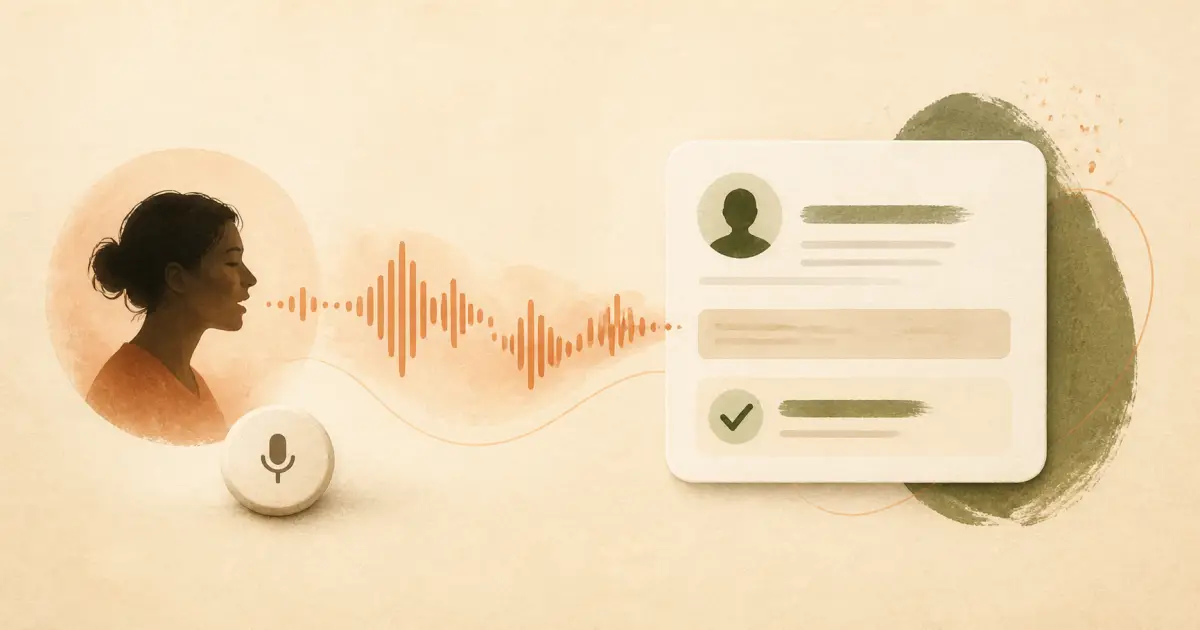
A typed reply can read as colder than you meant. A live call removes the doubt, but it costs both of you a calendar slot and your full attention. A voice note sits in the useful middle: it carries tone, warmth and urgency, and it lets each of you record or listen when your head is clearest.
The catch is that a voice note only works when it is short and structured. A twelve-minute monologue is not a premium experience, it is homework. Aim for roughly three minutes, and the client can act on it the same day.
Here is the structure I use.
The 3-minute audio framework
Four parts, in this order.
1. Validation and diagnosis (30 seconds)
Name what they sent and the pattern you see. This proves you actually read it.
“Sarah, thanks for getting the launch numbers in on time. Your conversion rates are healthy, but the checkout step is where people drop off.”
2. The core reframe (90 seconds)
Give one insight, tied to a principle in your method. One idea only.
“The principle to apply here: instead of asking buyers for five fields before they see the pay button, move to a single-step checkout. In our past cases, removing the extra fields lifted sales by around 25%.“
3. The single next action (45 seconds)
One task, with a deadline. Not three.
“Your task this week is to trim the checkout page to name, email and card. Try the flow yourself, then send me the updated link by Thursday.”
4. Encouraging close (15 seconds)
“You are close on this one. Have a good week, and I will look out for your update.”
The order matters. Appreciation first keeps the client open to the reframe. The single action at the end is what they will actually remember.
Read once before you record
Never press record the first time you read a client’s check-in.
Give yourself 60 seconds: read the update once, skim your previous note, and jot two or three bullets. That pause removes most filler words and stops you from thinking out loud. The client hears a decision, not a first draft.
Tools can speed this up. A good AI coaching platform can transcribe the client’s check-in and pull out the key points, so you start the recording already oriented.
Pair audio with a written spine
Audio builds the relationship. Text makes implementation easy.
When your tools and consent process allow it, send a transcript and a short action list with the audio. Then the client can:
- listen on a walk or in the car, for tone and momentum;
- scan the written list at their desk when they sit down to work.
An asynchronous coaching app can keep the audio, the transcript and the action items in one client record. Check its privacy, retention and access controls before you upload sensitive material.
Keep audio optional, and in scope
Audio is a format, not an obligation. Offer a written version for clients who are deaf or hard of hearing, work in a noisy or open office, or simply prefer to scan instructions. Keep the written summary to the decision, the next action and the deadline.
Keep your boundaries too. For coaching that touches health, mental health, legal or financial matters, a voice note is not a substitute for urgent professional help. Say where your scope ends and how a client reaches emergency support, as covered in async coaching boundaries and cadence.
Reuse your voice for repeat lessons
Not every audio has to be a fresh recording. For recurring lessons or foundational exercises, coaches can use voice cloning for coaches or a small library of produced audio guides. Use those for the stable teaching, and save your live voice notes for the personal, high-context moments.
Presence without the calendar
Good coaching is not measured in minutes on a call. It is measured in how clearly the client can move.
A tight three-minute voice note gives a client the sense that you are in their corner, while keeping your own week free of meetings that did not need to happen.
Frequently asked questions
Why is voice note coaching better than text messaging? +
Voice can convey nuance, warmth, and emphasis that are easy to lose in text. It offers a personal async option, but clients should be able to request written guidance when audio is not accessible or convenient.
How long should an async coaching voice note be? +
Between 2 and 4 minutes is ideal. Anything longer than 5 minutes tends to become rambling and hard for the client to review and take action on.
Should you transcribe voice notes for coaching clients? +
Yes. Providing an automated text transcript and bulleted summary alongside the audio recording lets clients quickly review key takeaways, search their history, and implement faster.