Async Coaching
The Premium Offer Between a Course and 1:1
Pure content scales but gets ignored. Live 1:1 works but does not scale. Async coaching is the missing middle offer, personal enough to matter, scalable enough to grow.
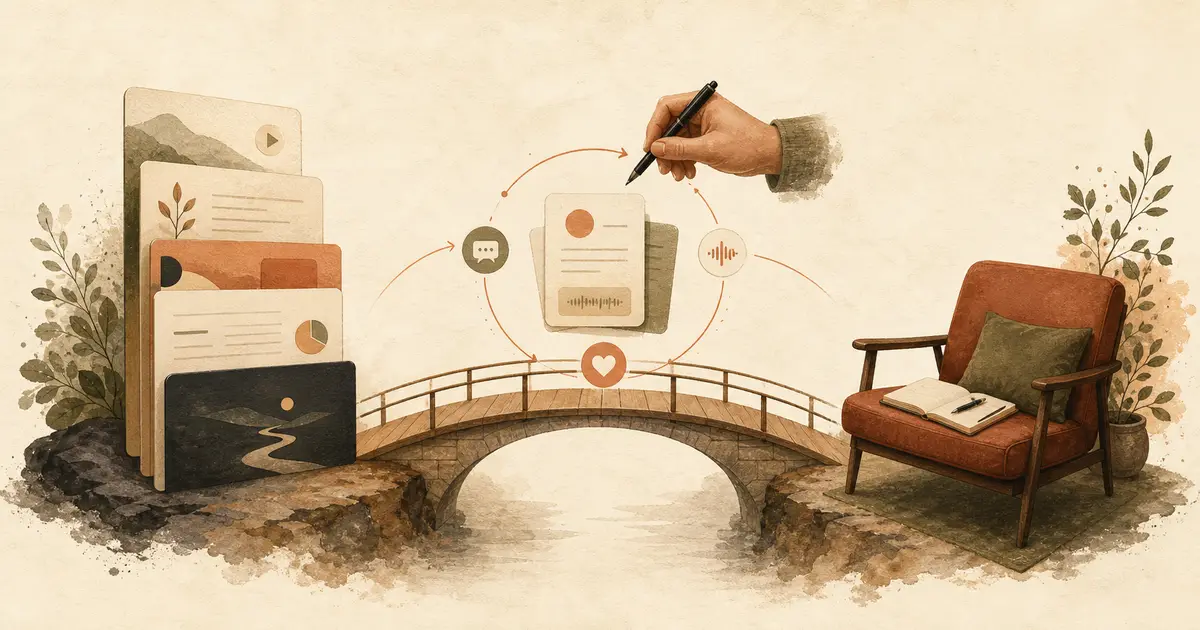
Most coaching businesses have two offers and a hole in the middle. At the bottom, a course: cheap, scalable, and rarely finished. At the top, 1:1: powerful, personal, and capped by the hours in your week. Between them sits the offer most of your buyers actually want, and most coaches do not sell.
Why the middle is empty (and valuable)
Pure content scales but is easy to ignore. Live 1:1 works but does not scale: time zones, calendar Tetris, income limited to billable hours. So coaches jump from a low-priced course straight to high-ticket 1:1, skipping the buyers who want guided application without a premium private engagement. That gap is where revenue leaks.
Async coaching fills it
Async coaching is personal like 1:1 and scalable like a course. The client checks in, receives a session built for them in your method, and stays accountable, without a live call. You get the personalization that makes people finish and the leverage that lets you serve many at once.
How it changes the ladder
With a middle offer, your ladder reads: course for self-starters, async coaching for people who want guided results, 1:1 for those who want your direct time. Each tier feeds the next, and your average sale rises because the middle captures buyers who would otherwise leave with just a course or nothing.
Pricing follows position
Because it sits between the two, it prices between them: more than content, less than your full calendar. The cleanest first step is often to turn an existing course into this middle offer rather than building something new.
Frequently asked questions
What sits between a course and 1:1 coaching? +
Async coaching. A course scales but is impersonal and rarely finished; 1:1 is personal but capped by the coach's hours. Async coaching is the middle offer: personalized and accountable like 1:1, scalable like a course.
Why do I need a middle offer at all? +
Because the gap between a cheap course and expensive 1:1 is where most of your willing buyers sit. They want more than content and cannot afford or do not need full 1:1. A middle offer captures them and raises your average sale.
Is the middle offer hard to deliver? +
Not if AI handles the repetitive delivery and you validate. The client checks in, receives a personalized step in your method, and you approve the parts that matter. It scales without eating your calendar.